There Is Always A Way

If you have something you genuinely want to do, something that is good for you and for others, then you should go out and do it. Will it always be easy? No. Yet, if that’s what you want to do, there is still a way around obstacles, including your own questioning of yourself.

I know that you have probably talked to others about your great ideas, and yet, having done so you probably have a mixed bag of ‘You go get them,’ and ‘You don’t want to do that.’ What you want to do is consider each comment you have received, who it’s coming from, and what their reason was in giving that advice to you and why they phrased their response the way they did.

What you want to understand is that people care about you and people also have concerns over the things which they fear. They are pulling from their experiences and what they would be willing to do or not do to accomplish something. They can’t speak for you because they don’t know what your determination can do to make things happen.

If you do your research, you know that there will be work involved. You also understand that you will have ups and downs as you work through your projects. The Wright brothers didn’t go to the beach one weekend and fly a plane. The first 12 seconds of flight, covering 120 feet, was actually the result of years studying, building, and having setbacks. And then, finally prevailing. As you plan your quest, you need to have a talk with the person in the mirror and determine if you are willing to do what it takes to meet your goals.

If the answer is really no, you need to find a new set of goals. If the answer is yes, then order an extra quart of elbow grease because you know you’ve got some work to do. The neat thing is if you want it, and you’re willing to work for it, I am not going to be the one to bet against you achieving your dreams.

Thank you for being with me today. I hope to be with you again tomorrow.

Weighing Your Objectives

Because we can do those tasks, we set our mind to accomplish, we sometimes think we can do everything we want.  In reality, we cannot do everything all the time.  We are limited by our own lack of endurance, need for rest, lack of financing, and the overwhelming offerings that our universe puts in front of us to enjoy.

Once we realize we can only do so much, we need to make decisions.   The critical first step is to know what is most important to us. Those are the things that we work for first.  And those are also the things we will work on the most.

We do not abandon everything else we wish to do, we plan them out as a set of objectives.  There are many ways to do this.  Some people will set up a quarterly schedule where they Tackle a new project over a 13-week timeline.  Some will use monthly planning, and for other projects, an annual forecast will be used.  Sometimes a project is so big, a 5 or 10-year plan is needed.

There is a problem that can creep up on us.  We can forget what we wanted to do.  That is why having a journal is so important.  When you get good ideas, write them down in a journal and that way you can have a place to go and look at when you are thinking of what projects you want to plan next.

Is all this easier?  Well, it is easier than a lot of people think.  And, the time spent writing things down up-front is only a fraction of what it would take to retrace your steps and find out what you were thinking six or eight months ago.

I know that everybody has their own nuances to scheduling and completing tasks.  I am just offering a suggestion to help you in doing that little extra through a bit of organization. Try a little, and see if it might work for you.

Thank you for being with me today.  I hope to be with you again tomorrow.

Only One Reason Counts

Yesterday we thought about the fact that there could be a thousand reasons not to do something. And that was all right because you only needed one reason to do what you want.  Only one reason counts.  Yours.  So how do you know that it is your reason, and your idea is sound?

Great question.  And like most excellent questions, it can lead you on a long search for answers.  I believe the best way to look at a challenge like this is to first understand what you expect the end of your journey to be. 

In other words, you have an idea of what you want to do.  Think about what it will look like when you have accomplished the goal.  Be as specific as you can.  What are you doing, how are you feeling, what is going on?  Visualize the scene.  What are the emotions like?  Write it down. 

Now you know where you think you want to be.  At this moment, it is just a dream on a piece of paper, you have a lot of research and hard work to make it real.  Anything worth having is worth working to obtain. Right now, the job is reverse engineering. 

During this exercise, you cannot just assume or take someone else’s thoughts as reality.  You need to get as much factual information as possible. You need to research on-line, talk to the people who are now where you want to get to, and weigh all of the answers to see if it is really what you want to do.

Start with where you believe you want to be, and ask what do I do to get there.  Based on what you have found in your research, write down each thing you have to do on post-it notes.  One item per post-it and do not worry about the order at this point. 

When you get everything written down, then start to loosely arrange the post-its into an order on a wall or board.  There will probably be gaps, and there will be things you have not thought of yet.  Doing this will help you to identify areas you need to consider.

Some of the questions you need to be asking as your ideas start to take real shape in this are:

  • Is this what I am really looking to accomplish?
  • Am I willing to do what it takes to get the results I want?
  • Can I indeed be happy where this will take me?

There are probably many other questions you will have.  I do not know them because they are your questions. Tomorrow we will look at weighing the objectives we seek.

Thank you for being with me today.  I hope to be with you again tomorrow.

A Thousand Reasons Why

Tell someone something or ask their advice, and you will probably find yourself knee-deep in thoughts, concerns, and cautionary tales.  Tell them that you are going to do something and the reasons why you should not do it or do it your way come gushing forth.  Everyone has an opinion.

We have all seen the joke books on the store shelves, ‘One Hundred and One Ways to Cook Venison,’ or ‘500 tips for makeup’ or ‘1,000 ways to save money’ or any of the other books of this nature written each year. Sometimes it feels that advice on why you should not do something is more prevalent then why you should. And that is okay because there can be 1000 reasons you cannot do something, you only need one good reason why you should.

Actually, everyone else giving you reasons why you should not only boil down to the fact that they should not. Their thoughts really have little to do with you or the why’s for you wanting to do something. Listen to them, yet judge for yourself whether or not their concerns make any sense. And keep the thoughts of others in mind when planning, because it’s always good to have some what-if scenarios in your back pocket, just in case.

You always want to check out what you’re planning to do, to know that it’s safe, feasible, and the outcomes you are expecting are what you really want. To do this, there is a lot of research, some long nights sometimes, and plenty of that midnight oil that causes the candle to burn both ends. Even though you know that as you go through this, some things will change along the way, you don’t know exactly what. The fact that you have done your research and that knowledge which you have gained will help you to make the right changes as they are needed.

You can never let anyone steal your objectives in life by making you afraid to attempt them. It is your life. There are no guarantees and very few safety nets. Many have won, and many have failed in their quests, and yet, they are all the better, winning or losing because they went out and tried.

Thank you for being with me today. I hope to be with you again tomorrow.

What Is Your Footprint Like?

When we walk the earth, we can leave a footprint of what our worth to others is. The footprint is not actually an impression in mud that can be so easily washed away. The imprint is what we leave in the minds and in the hearts of others whom we interact with along the way. And quite often it is what we did for them that makes us memorable.

You know people whom you have never personally met, who have passed from this earth long ago, and yet it’s still their deeds that are the cause of how you remember them. George Washington, who helped found our country and was our first president. You may remember Alexander Graham Bell when you make a phone call. You may think of Steve Jobs, who helped bring new ideas in computing and entertainment into our world. These three people and thousands more are remembered for the work that they had done with and for others.

We need to consider what the footprint we leave behind will look like. It has been said that most people cannot remember further back than their great-grandmother. This is because family generations farther back either had very little or absolutely no interaction with those family members of today. Unless you had a direct connection with Margaret Wummer, you probably would not know her. Although she did incredible things, raising her children and grandchildren, helping in her church, and generously donating to her community.

It is essential for us not to keep our talents bottled up within us. For we are here to work as a team and to grow as cultures and societies. The more we do, the more we touch other people. And, the more connections we have, the more likely we are to be remembered. It is vital to work with others both for their sake and definitely for ours.

Keeping your talents to yourself means that you are the only one who ever benefits from them. That means that you have a lot of good in you, which is never seen or used. People like to talk about the positives in life around them. They also have a tendency to gloss over the ordinary things and those that are minorly annoying.

I’m not saying we all need to invent the computer or the telephone. Also, I think we might get in trouble if we try to establish our own country. Yet, we can do what we can do to help others. And that is important because we know that there are times when we will need help ourselves. We are not trading, we are sharing. And I believe that’s why talents are given to us to start.

Thank you for being with me today. I hope to be with you again tomorrow.

Thinking Critically

Thinking Critically

There is a trick to life. The idea is it’s easier to prevent trouble, then have to explain it, fix it, and make up for it afterward. I’m going to try to keep away from quoting some corny things like an ounce of prevention is worth a pound of cure. Instead, we will talk about something that everyone can learn and do.

As you learn something, you start to learn the problems and preventions which will go on around it. We call this common sense. Because common sense is in such a small supply these days, we also have a fancier word for it, critical thinking. If you work on something for two years, you start to grow a natural form of critical thinking for the things with which you are working.

Eighty percent of four-year college graduates do not work in their major studies. Yet, many jobs demand a bachelors degree. This is because these graduates have spent four years learning and understanding critical thinking. The fact that they graduated proves they have a good handle on the concept.

As a line supervisor in contract manufacturing, I didn’t have a bachelors degree, I had over 20+ Years in the Air Force and an Associates in Applied Science degree in electronic systems technology. One thing for sure, I understood and used applied critical thinking principles. I could not have done the job without those principles.

Whatever you use as your guiding rules, you need to have significant respect for critical thinking. Everything that is handed to you needs to be looked over. You need to know what skills are required to complete the task, what time is involved, and are the people working on it skilled enough to accomplish the work properly? You need to sit down and figure out exactly what could go wrong, and what safety precautions should you put in place to prevent errors.

If you take the time upfront, you do not have to spend extra time on the backend of the project trying to figure out what went wrong. Additional time will not have to be paid for reworking errors. You won’t stand in fear of losing a customer over poor workmanship. You will be able to move onto the next project, and both you and your team will be viewed as people who get things done correctly.

Thank you for being with me today. I hope to be with you again tomorrow.

Do You Trust?

It’s interesting to watch people sometimes. The way they move, the way they think, and the way they act around others. This is really not done for entertainment, instead, to help us to understand ourselves. For although we are each different, we each started off with the same set of genetic’s. The collection of letters representing a code that determines who we will be and how our bodies will work.

It’s interesting to watch people think, who and how they make friends, who they trust, and why they trust those people. For some, it is the trust of the family. For others, it may be the truest of friends who have proven themselves in combat or other ordeals. And for some, they may not trust anyone.

I understand the ones who have a hard time trusting anybody. I was one of those who could not trust others for a very long time. And I came to realize that I could not trust others because I did not trust myself. I had put my real self aside to meet the demands of others. And yet this is not a positive way to live.

To live a good and meaningful life, you have to trust yourself. To do so, you have to be yourself. And in learning to be yourself and trust yourself, you will learn how to trust and befriend others. Life is too short and our needs to great, to live as anybody but ourselves.

To live as yourself, you have to accept your frailties. We all have them, and if we try to live as what others want us to be rather than ourselves, those frailties will only get worse because they become hidden. We need to face ourselves, which initially is a scary situation in and of itself. And, we have to decide what is truly the best of us, and how we will use it in our daily lives. When we start this path, we start our trip to bettering not only ourselves but all those whom we interact with through thought and deed.

The act of becoming better with who you are is often an exercise of relaxing and being real rather than tensing up and being someone else.

Thank you for being with me today. I hope to be with you again tomorrow.
Targets of Rare Opportunity

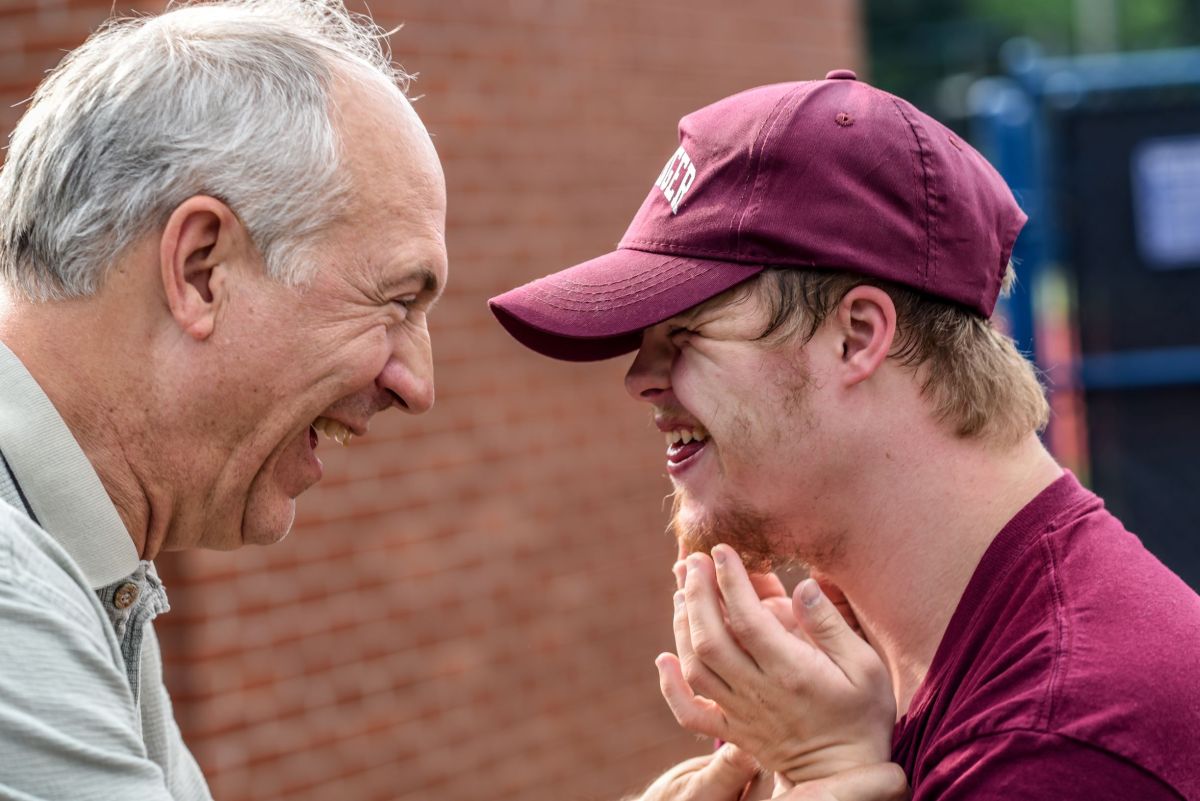
We are all busy. We all have our plans to accomplish, our daily routines to follow, and our hopes and dreams to chase. And yet, you will find that occasionally something comes along which is so very poignant, we find ourselves having to stop and treat the situation differently. I call this a target of a rare opportunity.

Targets of rare opportunity lay outside the realm of everyday life. And yet we will all find them, sometimes without even searching for them. The opportunity is to do something different or meaningful for ourselves and for someone else. Targets of opportunity often grant a change for the better for those they affect and those that are affected by the changes that will come.

A target of opportunity is a chance to do something good. To change something for someone else in a positive way. It is usually a way that you have never thought of, for someone or something that you have never noticed. It is also something that has the potential to profoundly change your life for the better.

Before you dismiss this idea as romantic poetry and pie-in-the-sky mentality, think back. Did somebody ever grab your hand just before you stepped in front of a speeding car? Has someone ever shown up exactly when you needed them? Did you ever get an award or reward that you never expected? Has anything else happened to you unexpectedly out of the blue, positively changing your life for the better?

The truth is these moments in realizing a target of opportunity cannot be planned and are very hard to seek after. Targets of opportunity are very serendipitous in nature. When you recognize one, you want to pay attention and take action. Moments like this do not come often, and have a tendency to fade fast if not acted on. It is usually a disturbing thought to realize you had an opportunity and missed it. After all, real targets of opportunity are not that common.

Thank you for being with me today. I hope to be with you again tomorrow.

Be Open Be There

No matter what you want to do at life, you should want to do the job enough that you are willing to study how to be the best. And, while doing so, you must understand and admit you will make the mistakes of the uninitiated during the process until you learn how to be better. No matter what you wish your new job to be, there will be hurdles along the way that you can only master by being there. You have to learn some things by doing.  Books and videos will never teach the small human moments that each career holds.

There is a difference between the willingness to learn from your mistakes and just ignoring those errors and trying to hide them. It is often the difference between a happy professional and a mediocre worker. One is willing to acknowledge and learn, and the other wants to hide mistakes and pretend they did not happen.

Throughout your professional career, and especially while you are learning and growing within that career, you need to stand up and let the light of knowledge and honesty shine in. You can see and learn better out in the open. It is important to remember that you are not trying to fool people into thinking you know it all. You are not trying to make others believe that you are the best at everything you do. You are there to help them, to learn yourself, and not build your own ego.  The best advice is to be humble and be open to your clientele.

Others will know the truth. You are trying to do your best to offer what you know and help them. Others are going to appreciate what you are doing for them, and they will also understand that no one knows everything.  You cannot hide that from the light. After all, we are all human.

Thank you for being with me today.  I hope to be with you again tomorrow.