

A Thousand Reasons Why

Tell someone something or ask their advice, and you will probably find yourself knee-deep in thoughts, concerns, and cautionary tales.  Tell them that you are going to do something and the reasons why you should not do it or do it your way come gushing forth.  Everyone has an opinion.

We have all seen the joke books on the store shelves, ‘One Hundred and One Ways to Cook Venison,’ or ‘500 tips for makeup’ or ‘1,000 ways to save money’ or any of the other books of this nature written each year. Sometimes it feels that advice on why you should not do something is more prevalent then why you should. And that is okay because there can be 1000 reasons you cannot do something, you only need one good reason why you should.

Actually, everyone else giving you reasons why you should not only boil down to the fact that they should not. Their thoughts really have little to do with you or the why’s for you wanting to do something. Listen to them, yet judge for yourself whether or not their concerns make any sense. And keep the thoughts of others in mind when planning, because it’s always good to have some what-if scenarios in your back pocket, just in case.

You always want to check out what you’re planning to do, to know that it’s safe, feasible, and the outcomes you are expecting are what you really want. To do this, there is a lot of research, some long nights sometimes, and plenty of that midnight oil that causes the candle to burn both ends. Even though you know that as you go through this, some things will change along the way, you don’t know exactly what. The fact that you have done your research and that knowledge which you have gained will help you to make the right changes as they are needed.

You can never let anyone steal your objectives in life by making you afraid to attempt them. It is your life. There are no guarantees and very few safety nets. Many have won, and many have failed in their quests, and yet, they are all the better, winning or losing because they went out and tried.

Thank you for being with me today. I hope to be with you again tomorrow.

What Is Your Footprint Like?

When we walk the earth, we can leave a footprint of what our worth to others is. The footprint is not actually an impression in mud that can be so easily washed away. The imprint is what we leave in the minds and in the hearts of others whom we interact with along the way. And quite often it is what we did for them that makes us memorable.

You know people whom you have never personally met, who have passed from this earth long ago, and yet it’s still their deeds that are the cause of how you remember them. George Washington, who helped found our country and was our first president. You may remember Alexander Graham Bell when you make a phone call. You may think of Steve Jobs, who helped bring new ideas in computing and entertainment into our world. These three people and thousands more are remembered for the work that they had done with and for others.

We need to consider what the footprint we leave behind will look like. It has been said that most people cannot remember further back than their great-grandmother. This is because family generations farther back either had very little or absolutely no interaction with those family members of today. Unless you had a direct connection with Margaret Wummer, you probably would not know her. Although she did incredible things, raising her children and grandchildren, helping in her church, and generously donating to her community.

It is essential for us not to keep our talents bottled up within us. For we are here to work as a team and to grow as cultures and societies. The more we do, the more we touch other people. And, the more connections we have, the more likely we are to be remembered. It is vital to work with others both for their sake and definitely for ours.

Keeping your talents to yourself means that you are the only one who ever benefits from them. That means that you have a lot of good in you, which is never seen or used. People like to talk about the positives in life around them. They also have a tendency to gloss over the ordinary things and those that are minorly annoying.

I’m not saying we all need to invent the computer or the telephone. Also, I think we might get in trouble if we try to establish our own country. Yet, we can do what we can do to help others. And that is important because we know that there are times when we will need help ourselves. We are not trading, we are sharing. And I believe that’s why talents are given to us to start.

Thank you for being with me today. I hope to be with you again tomorrow.
Thinking Critically

Thinking Critically

There is a trick to life. The idea is it’s easier to prevent trouble, then have to explain it, fix it, and make up for it afterward. I’m going to try to keep away from quoting some corny things like an ounce of prevention is worth a pound of cure. Instead, we will talk about something that everyone can learn and do.

As you learn something, you start to learn the problems and preventions which will go on around it. We call this common sense. Because common sense is in such a small supply these days, we also have a fancier word for it, critical thinking. If you work on something for two years, you start to grow a natural form of critical thinking for the things with which you are working.

Eighty percent of four-year college graduates do not work in their major studies. Yet, many jobs demand a bachelors degree. This is because these graduates have spent four years learning and understanding critical thinking. The fact that they graduated proves they have a good handle on the concept.

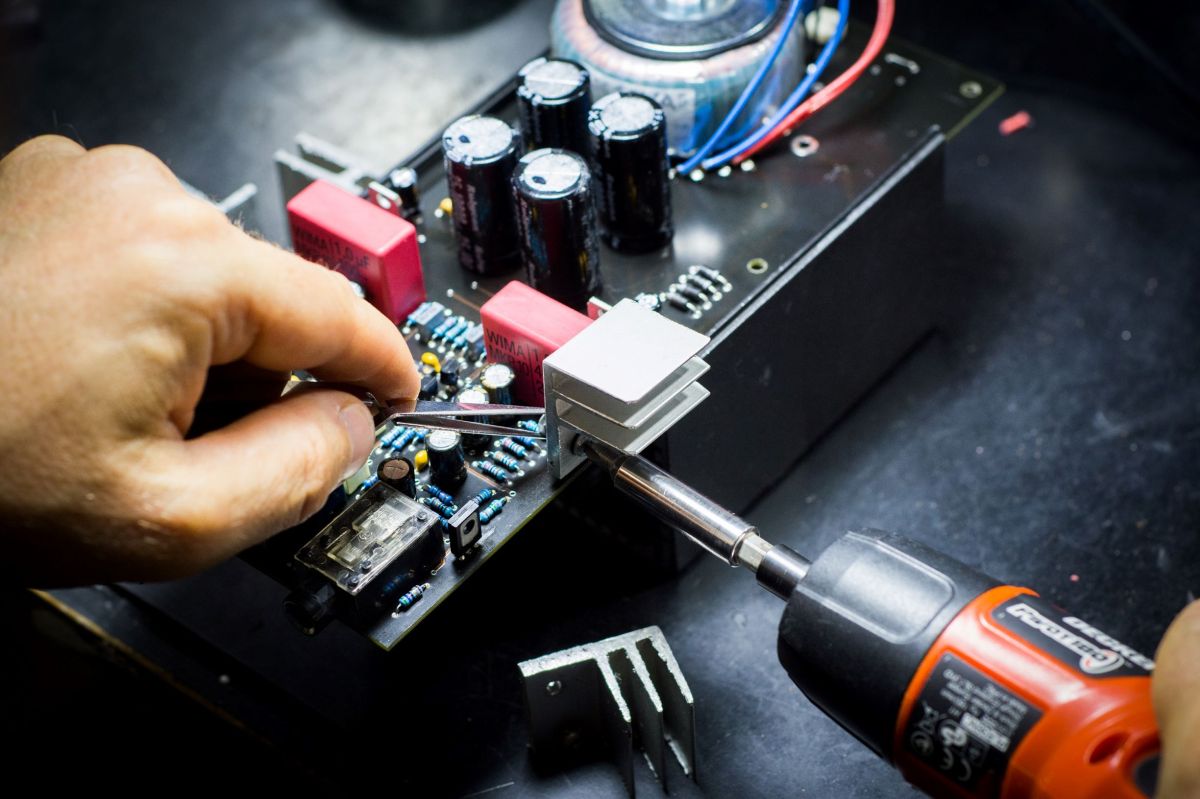
As a line supervisor in contract manufacturing, I didn’t have a bachelors degree, I had over 20+ Years in the Air Force and an Associates in Applied Science degree in electronic systems technology. One thing for sure, I understood and used applied critical thinking principles. I could not have done the job without those principles.

Whatever you use as your guiding rules, you need to have significant respect for critical thinking. Everything that is handed to you needs to be looked over. You need to know what skills are required to complete the task, what time is involved, and are the people working on it skilled enough to accomplish the work properly? You need to sit down and figure out exactly what could go wrong, and what safety precautions should you put in place to prevent errors.

If you take the time upfront, you do not have to spend extra time on the backend of the project trying to figure out what went wrong. Additional time will not have to be paid for reworking errors. You won’t stand in fear of losing a customer over poor workmanship. You will be able to move onto the next project, and both you and your team will be viewed as people who get things done correctly.

Thank you for being with me today. I hope to be with you again tomorrow.

Do You Trust?

It’s interesting to watch people sometimes. The way they move, the way they think, and the way they act around others. This is really not done for entertainment, instead, to help us to understand ourselves. For although we are each different, we each started off with the same set of genetic’s. The collection of letters representing a code that determines who we will be and how our bodies will work.

It’s interesting to watch people think, who and how they make friends, who they trust, and why they trust those people. For some, it is the trust of the family. For others, it may be the truest of friends who have proven themselves in combat or other ordeals. And for some, they may not trust anyone.

I understand the ones who have a hard time trusting anybody. I was one of those who could not trust others for a very long time. And I came to realize that I could not trust others because I did not trust myself. I had put my real self aside to meet the demands of others. And yet this is not a positive way to live.

To live a good and meaningful life, you have to trust yourself. To do so, you have to be yourself. And in learning to be yourself and trust yourself, you will learn how to trust and befriend others. Life is too short and our needs to great, to live as anybody but ourselves.

To live as yourself, you have to accept your frailties. We all have them, and if we try to live as what others want us to be rather than ourselves, those frailties will only get worse because they become hidden. We need to face ourselves, which initially is a scary situation in and of itself. And, we have to decide what is truly the best of us, and how we will use it in our daily lives. When we start this path, we start our trip to bettering not only ourselves but all those whom we interact with through thought and deed.

The act of becoming better with who you are is often an exercise of relaxing and being real rather than tensing up and being someone else.

Thank you for being with me today. I hope to be with you again tomorrow.

Targets of Rare Opportunity

We are all busy. We all have our plans to accomplish, our daily routines to follow, and our hopes and dreams to chase. And yet, you will find that occasionally something comes along which is so very poignant, we find ourselves having to stop and treat the situation differently. I call this a target of a rare opportunity.

Targets of rare opportunity lay outside the realm of everyday life. And yet we will all find them, sometimes without even searching for them. The opportunity is to do something different or meaningful for ourselves and for someone else. Targets of opportunity often grant a change for the better for those they affect and those that are affected by the changes that will come.

A target of opportunity is a chance to do something good. To change something for someone else in a positive way. It is usually a way that you have never thought of, for someone or something that you have never noticed. It is also something that has the potential to profoundly change your life for the better.

Before you dismiss this idea as romantic poetry and pie-in-the-sky mentality, think back. Did somebody ever grab your hand just before you stepped in front of a speeding car? Has someone ever shown up exactly when you needed them? Did you ever get an award or reward that you never expected? Has anything else happened to you unexpectedly out of the blue, positively changing your life for the better?

The truth is these moments in realizing a target of opportunity cannot be planned and are very hard to seek after. Targets of opportunity are very serendipitous in nature. When you recognize one, you want to pay attention and take action. Moments like this do not come often, and have a tendency to fade fast if not acted on. It is usually a disturbing thought to realize you had an opportunity and missed it. After all, real targets of opportunity are not that common.

Thank you for being with me today. I hope to be with you again tomorrow.

Be Open Be There

No matter what you want to do at life, you should want to do the job enough that you are willing to study how to be the best. And, while doing so, you must understand and admit you will make the mistakes of the uninitiated during the process until you learn how to be better. No matter what you wish your new job to be, there will be hurdles along the way that you can only master by being there. You have to learn some things by doing.  Books and videos will never teach the small human moments that each career holds.

There is a difference between the willingness to learn from your mistakes and just ignoring those errors and trying to hide them. It is often the difference between a happy professional and a mediocre worker. One is willing to acknowledge and learn, and the other wants to hide mistakes and pretend they did not happen.

Throughout your professional career, and especially while you are learning and growing within that career, you need to stand up and let the light of knowledge and honesty shine in. You can see and learn better out in the open. It is important to remember that you are not trying to fool people into thinking you know it all. You are not trying to make others believe that you are the best at everything you do. You are there to help them, to learn yourself, and not build your own ego.  The best advice is to be humble and be open to your clientele.

Others will know the truth. You are trying to do your best to offer what you know and help them. Others are going to appreciate what you are doing for them, and they will also understand that no one knows everything.  You cannot hide that from the light. After all, we are all human.

Thank you for being with me today.  I hope to be with you again tomorrow.

Keep Up the Good Work

If you got some good things done this week, congratulations.  If you faltered in some areas, keep trying.  The reason most people do not do this is that it is tough to keep up at first.  Yet, for those who stick with the real idea of organization, there are great rewards.

As you follow this path, you will want to keep some notes so that you can go back and review what worked and did not work. Having a few notes and some ideas written down will often save you the hassle of having to repeat an exercise in futility. After all, those who forget the past are usually doomed to repeat it.

Your notes don’t have to be overly organized, super neatness has never been one of my virtues. They can be logged in or on anything that you care to use. I usually use a Cambridge 9.5” x 5-3/8” notebook made by Mead. It has 80 pages with line pages on one side and graph paper on the back. I find them easy to carry and store and may hold a lot of notes. I actually have a 20-year record of notes although I have to warn you, the more logs you have, the harder it is to keep track of them.

If you’ve been trying some of the things I have suggested this week, good for you. You have done the hardest part, and that is putting something into motion. Once you are in motion, you will stay in motion unless acted on by outside forces. And even with gravity and naysayers, you will find it much easier to keep in motion once you have started.

For now, please keep going. If you have questions, please ask. If you have concerns, let’s talk about them. You are doing great. Now is the time to have faith and trust in yourself, work with those around you, and strive towards that better and more relaxed future.

Thank you for being with me today and this week. I hope to be with you again soon.

Accurate Planning

We all have days when we feel that our planning is little better than throwing darts at our calendar and hoping. Granted, we do not have control over everything. There are many demands which lurk in the shadows to blindside us whenever we think we have everything under control.

We need to look at our accuracy as a ratio. How often our planning state was correct, and how often we had to move on to plan B, C or D. Some of the best hitters in the major leagues only hit in the 300’s. If you’re planning is consistently 50-50 then you are doing a pretty good job. Granted, there are times you will be better, and times that will not be quite that good. The idea is to keep swinging for the fence.

The real trick is to be able to figure out, fast, what others are throwing at you on any given day. If you recognize the change-up of what’s coming at you, it makes it easier for you to adjust, or just move on to plan B or C. You may be looking at this and figuring that this means more work on your part. Isn’t a little more work worth not just standing there and being caught flat-footed?

When you’re out to razzle-dazzle your fans whether at home taking care of the house, or doing battle in the corporate environment, a little planning, and preparation, can absolutely make you look like a star performer. How do you do this? Be observant, and be able to tie cause-and-effect together. Know what customarily happens on each day of the week, and then try to understand ‘who’ asked different when ‘what’ happens. This is kind of like lining up your own, ‘If This, Then That.’

If you watch old movies, you may remember something like this between Spencer Tracy and Katharine Hepburn, or several of the other paired stars like in The Thin Man.  It is not very hard to do, just pay a little attention and look for who want something different and what might have caused the request. Being up on top of work requests and needs will save you a lot of time and trouble by not having to either redo something or do something completely different.

As with everything being suggested this week, this is not hard considering what it will save you in time and effort. Being able to anticipate needs and being prepared, I would think, is a trait that would be sought after in almost any work environment.

Thank you for being with me today. I hope to be with you again tomorrow.

Time to Set an Order to Your Schedule

To save your energy and get the most out of the work you do, it is good to set up an order to your plan.  The first question is, what tasks are time-sensitive and need to be accomplished?  Remember, there are two types of time. What needs to be done by 10 o’clock in the morning, and what should be done at a particular time of day?

Things needed to be accomplished done at a particular time of day rarely change, so, it’s best to figure out where those are and keep them in those general spots. Something needed by nine in the morning may not always need to be done by nine in the morning, and therefore should be added only as needed. If you usually have emergency requests at a particular time of day, leave a spot open, and if no needs come, then you have some extra time to use on something else.

Use your standard daily schedule as an outline. And then add-in any emergency needs or requests for you to help with other items. Also, remember that your full-time job is your full-time job. If you receive outside requests that are important, and you have time, you could handle them if you wanted to do so. Yet, if your time is booked already, your time is scheduled. In that case, the answer would have to be no unless the other person wanted to go to your management and have changes made.  You will know which things will be more critical than others, and you will have to work with your supervisor and others to ensure you are on the right track.

An essential part of your schedule is to take your lunch and take your breaks as they come up. If you do not, you are only wearing yourself down. We all need to stand up and walk away from our work every now and again, so our body can stretch and relax for a moment. Too much tension, either physical or mental, is no good for us and robs us of our ability to do our best. Eat a well-balanced lunch so that you have nourishment for the afternoon. Do not eat so much that you fall asleep.

Your work is essential to others. It is even more vital to you. Having work and getting it done is part of what makes you feel good. The brain releases endorphins. As this happens, you end up in a very positive frame of mind.

Thank you for being with me today. I hope to be with you again tomorrow.