
Updating your resume, LinkedIn profile, and other social media

In today’s job market, keeping your professional presence up-to-date is essential. If you’re currently available for employment, updating your resume, LinkedIn profile, and other social media is crucial to increasing your chances of being noticed by potential employers.

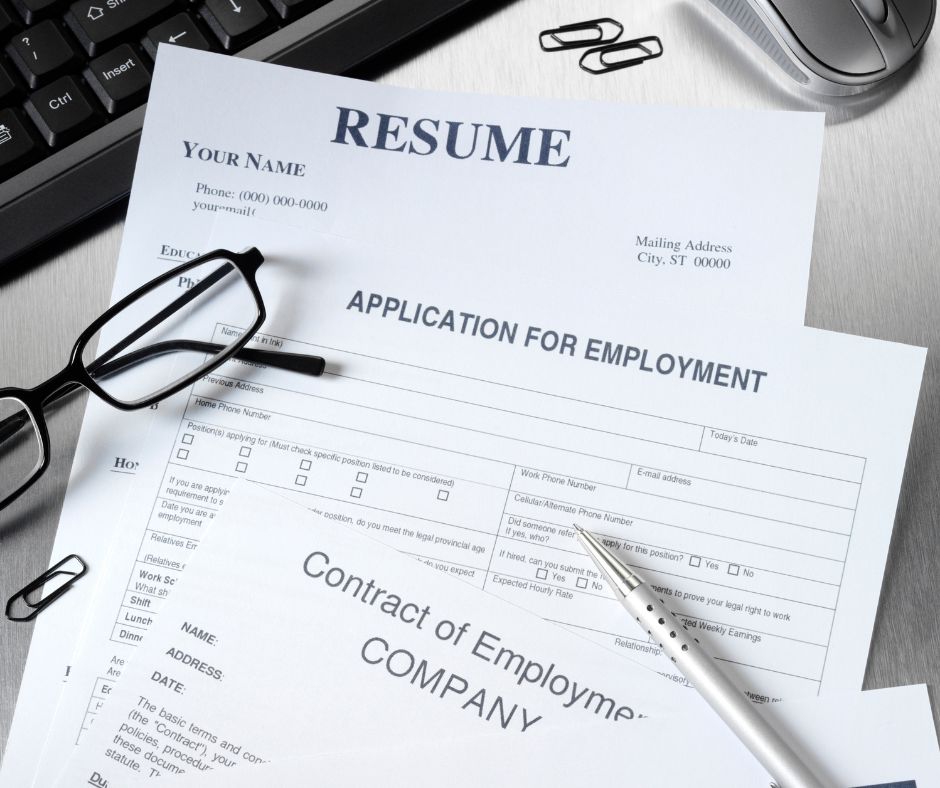
First, start with your resume. Review your work history, skills, and achievements to ensure they accurately reflect your current experience and expertise. Make sure your contact information is correct and up-to-date. Tailor your resume to the jobs you’re interested in to make yourself a more attractive candidate.

Next, update your LinkedIn profile. Ensure your headline and summary accurately reflect your current professional status and goals. Add a professional head-shot to your profile to increase your visibility and appeal. Add any new skills or certifications you have acquired, and make sure your work history is complete and up-to-date.

Finally, review your other social media profiles, such as Twitter or Instagram, to ensure they reflect your professional persona. Remove any potentially controversial or unprofessional content. Consider sharing industry-related articles or content to showcase your knowledge and expertise.

By updating your resume, LinkedIn profile, and other social media, you can increase your visibility and appeal to potential employers, ultimately increasing your chances of finding your next professional opportunity.

Finding A Job When You Need One

When you have to go out and look for a job, you want to get one requiring the skills you usually get paid for. Sometimes those skills may not be in demand. Rather than not working, you can look at all your strengths and skills to find needed jobs.

Many trainers will talk about making lists of what you have done, can do, and love to do. It is an excellent start to matching specific skills to jobs that need filling.

Many workforce centers and local community colleges offer a personality test (usually free) to help you determine what kinds of jobs you have a personality for. If you go to www.onetonline.org you can take an outstanding assessment for free. It only takes about 20 minutes to do it and get some ry

It is also good to seek feedback from trusted friends, family, or colleagues. Remember, when you are out of work and looking for a job, it is the time to let everyone know.

Try getting out and doing some volunteer work. Do some to get out and work with folks that will see you doing things. Do not let it take up all your time.

Keep a journal of what works well for you and what isn’t helping. Not everything works immediately, so have some patience.

Remember, it’s never too late to discover new talents and passions.

Mapping Your Time For The Week

Mapping your time is an effective way to stay organized and ensure you make the most of your time. To begin, create a schedule or planner that outlines your weekly tasks and responsibilities. This can include work assignments, appointments, exercise routines, and social activities.

Start by prioritizing your most important tasks and allocating specific time slots to complete them. Schedule breaks and downtime to avoid burnout and maintain productivity throughout the week.

Consider using time management tools such as:

  • timers,
  • calendars,
  • and to-do lists

To stay on track and monitor your progress. You may also want to consider delegating tasks or seeking help from others to ease your workload.

Remember to be flexible and adaptable as unexpected events arise throughout the week. A clear plan can help you stay focused and achieve your goals. By mapping your time for the week, you can maximize your efficiency and make the most of your valuable time.

Keeping Your Time Your Own

Normal 0 false false false EN-US X-NONE X-NONE

/* Style Definitions */ table.MsoNormalTable {mso-style-name:”Table Normal”; mso-tstyle-rowband-size:0; mso-tstyle-colband-size:0; mso-style-noshow:yes; mso-style-priority:99; mso-style-parent:””; mso-padding-alt:0in 5.4pt 0in 5.4pt; mso-para-margin-top:0in; mso-para-margin-right:0in; mso-para-margin-bottom:8.0pt; mso-para-margin-left:0in; line-height:107%; mso-pagination:widow-orphan; font-size:11.0pt; font-family:”Calibri”,sans-serif; mso-ascii-font-family:Calibri; mso-ascii-theme-font:minor-latin; mso-hansi-font-family:Calibri; mso-hansi-theme-font:minor-latin; mso-bidi-font-family:”Times New Roman”; mso-bidi-theme-font:minor-bidi;}

Keeping your time your own can be challenging in a world of distractions and
demands. However, there are strategies that you can employ to maintain control over your schedule and prioritize your tasks effectively.

One approach is to set clear boundaries around your time. This will involve
saying no to requests that don’t align with your goals or values. You may need
to delegate tasks to others and avoid time-wasting activities like social media
or excessive email checking.

Another helpful tactic is establishing a routine or schedule that you can
stick to. This can help you stay on track with your priorities and avoid distractions
or procrastination.

Additionally, it can be beneficial to develop a system for tracking your
tasks and progress. This can help you stay organized and focused and notice
areas where you may need to adjust your approach.

Ultimately, keeping your time your own requires a combination of the
following:

·        Discipline

·        Focus

·        self-awareness

You can do this by:

·     setting clear boundaries

·        establishing routines

·        staying organize

·        take control of your schedule


How Many People Are Out of Work

One often asked question is how many people are out of work today. The truth is it’s hard to tell exactly how many are out of work because, for many reasons, accurate numbers lag by close to a year and a half.

The better question is, how many jobs are currently open?

The Bureau of Labor Statistics says there are currently over 7.4 million unfilled jobs in our economy. That is more jobs than when the bureau opened in 2000. The number is probably higher because measuring all the Gig Economy jobs is hard.

Do not take this to mean there are plenty of jobs, and you don’t have to get one right now. These numbers do change. Also, some companies will take a while in the hiring process. If you want a job, get it as soon as you can.

Recap the First 21 Days of January

This month I have been giving hints on how to get jobs. Today I just like to go over some of the things I have mentioned. Tomorrow we’ll start talking about what you hear on the news, whether to listen to it or not and how to place yourself in the best position to find work this year.

Make sure your resume and cover letter are always up-to-date, and tailor them for each job you are applying for.

Before applying, research the company and its job description to ensure you are a good fit.

When looking for a job, reach out to everyone you know. Jobs are often gained because people you know may know someone who’s hiring.

Be persistent. You deserve a job. Don’t give up on yourself until you have the job.

I do not know if you were a scout; however, your new goal is to be prepared. Practice interview questions and think of short stories that demonstrate your skills and experiences. Follow up by contacting hiring managers and directors 2 weeks after sending a job application to see if there is an interest or need. Do not make yourself a pest

Ensure You Have Provided All Required Information And Documents

When you apply for a job, you want to ensure that you provide everything the employers have asked for. I know this sounds straightforward, but it is simple to forget and not send something important.

As a standard rule, an application package will contain

  • The Application – Make sure it is completely filled out and legible.
  • A letter of introduction,
  • Your resume for that company
  • If requested, a list of 3-5 people they can contact for information on you.
  • Any other items they may have asked for.

Make sure you list everything you send so you do not accidentally forget something.

Getting everything to the employer on time and not missing the deadlines is vital to getting the job. Employers do not like to give extensions to job applicants, and most will not.

Is your resume recent?

If you find a job you want, and you reach under your bed and pull out a old resume that’s two years old, dust it off, and send it in, you may be disappointed in the results. Employers aren’t interested in what you were doing two years ago as much as they are in what you were doing last week. You must keep your resume up to date.

When is the best time to rewrite your resume? The day you start your new job. And, of course, every time something significant happens, that will look good on your resume.

Every time you change your resume is a great time to go through it and make sure everything is correct, reads quickly, and holds you in the best light possible.

Always double-check that your resume is easy to read. I have seen people write extensive page-long paragraphs on what they’ve done for two and three pages of resumes with no proper line spacing and words pushed together as tight as possible. And I just knew no one was going to read them. And based on the results they gained, I believe I was right.

I consider it essential that when somebody gives you advice, you at least take a moment to check it out and see if it might be real. It’s not that employers are lazy. When they have a job to fill, they will take quick and easy paths to get the right person.

How Important Are Applications and Resumes

A good resume is essential to successfully gaining your desired job. Your applications and resumes need to be the most precise, clear, and exact that they can be. I will spend the next several days going into this in detail because it is that important.

Until I sat down and talked with hiring managers, I didn’t understand that this is where most people lose their job bids. Many people don’t realize this when they’re applying for jobs.

Your job application and resume speak volumes about what an employer can expect from you. A well crafted resume and application are great. One with fuzzy activities or dates will lose you the job.

For today I want to let you know how employers know if your application and resume are correct. They run a background check on all candidates who look like a good fit.

A line worker could be handling thousands of dollars worth of inventory. A janitor or custodian could carry the keys to every sensitive building area. Employers will do this for all good candidates because everyone they hire has to be trusted, not just the top brass.

If your dates and other information align with the background check, you pass to the next round. If not, they stop your chances there. They probably won’t even tell you why.

We will get more into this tomorrow. I will show you ways to ensure what your application and resume is accurate.

Do You Need A New Job Or A New Career?

There are many reasons that you may want to have a new career. Your old career may go by the wayside because of more recent computer programs. You may be looking for a better work-life balance. And it may be that you have changed your circumstances, such as a recent move.

AI tells us many different reasons for seeking a new career. Yet, the number one reason for wanting this is a lack of fulfillment. It turns out that people are just not enjoying what they’re doing at their current job. I understand. I have left jobs for the same reason and moved on to jobs that gave me more fulfillment.

I must caution that there is a lot of planning and forethought to go into a successful move from one job to another. That is what we’re going to be studying. Use your head; do not jump into something without weighing all the pros and cons first.

Changing jobs or careers could be the best thing that ever happened to Us. Yet changing jobs or careers without the correct preparation or forethought could be one of the worst. Where is thought many people have told me before, “look before you leap.”

Tomorrow we will look at some of the things you need to consider when changing employment.